
Free-ish Internet for West Africa.
Powered by an insurgent mesh and GC.
Gbe Mesh turns your phone into a mini tower. Hop-by-hop Wi-Fi mesh, no telco permission. Guaso Coin (GC) is the coordination layer that keeps access at ~US$2/year.
Presale Status

Buy GC in the Presale
You send SOL. You receive GC directly to your Solana wallet, backed by the Gbe Mesh subscription engine.
1. Connect Wallet
Use Phantom or a compatible Solana wallet in this browser. We’ll open a transaction for you and then trigger the presale bot to mint GC.
Estimate uses live SOL/USD and target 0.05 USD/GC. Final settlement based on on-chain tx.
Presale SOL receiver (for manual sends):
2FGCCowdnpkXX8MGWpdDWcPnpVrGfwHFeSd4choryfeM
After payment, GC is distributed from
EHDDMnRKGjSPA384pUcxAuA1unwG8SGAQK5tMDSJxNeB.
What You Are Funding
- Backhaul for Accra → Lagos → Abuja mesh clusters.
- City-node gateways and MT7981A boxes.
- Development and audits of the Treasury Bot price-band stabilizer.
- Onboarding ops: support, field techs, and builder grants.
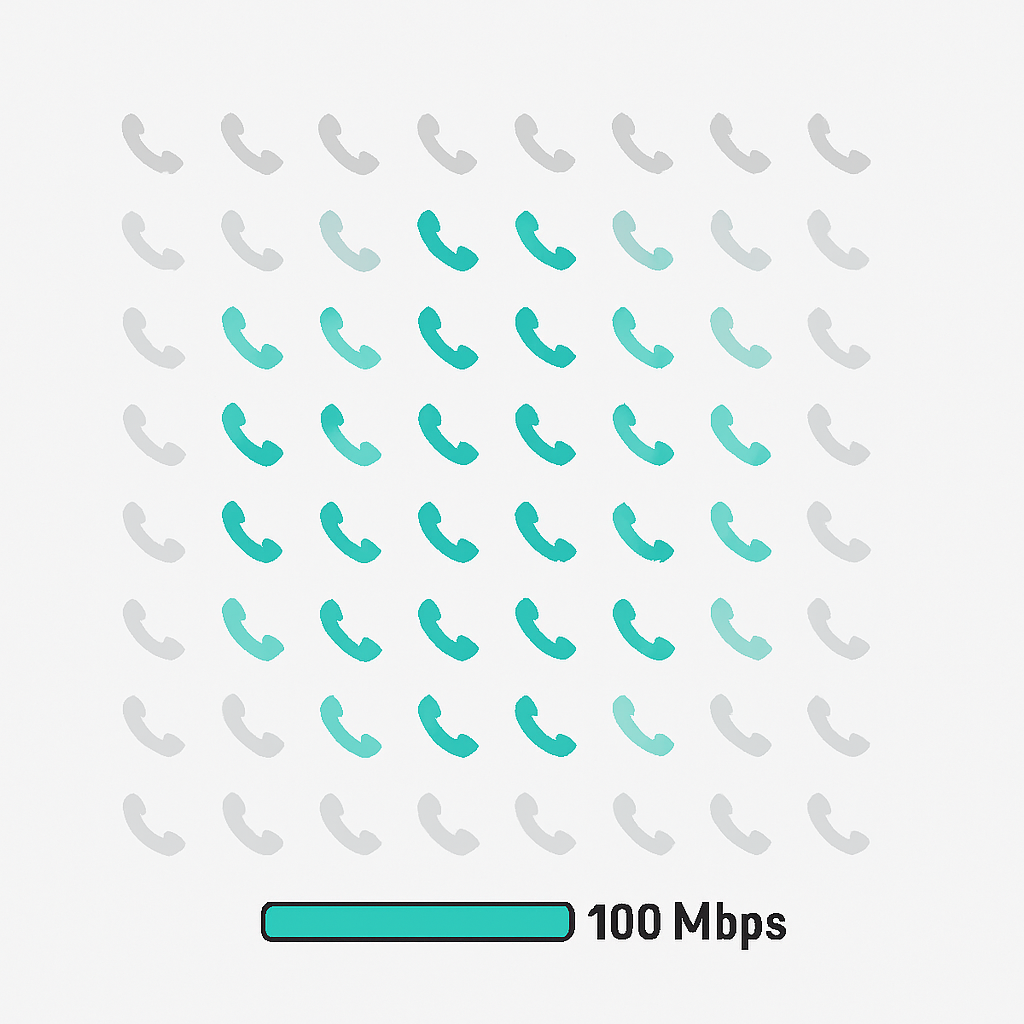
User flow: Buy GC → Talk to @GbeMeshBot → Receive Mesh-Pass → Install Gbe Pass → connect to the mesh.
The Gbe Mesh: Your Phone Becomes a Tower
Gbe Pass (one APK + root patch) upgrades idle smartphone radios into a fully routed mesh node. No telco permission, no proprietary CPE.
Radio Stack
- Neighbor discovery: BLE 5.x (coded PHY) for low-overhead beacons.
- Data transport: 802.11s mesh @ 5 GHz (fallback 2.4 GHz).
- Session layer: QUIC v1 over UDP, tuned for loss recovery.
- Security: ChaCha20-Poly1305, 4-layer onion routing, padded frames.
Field-tested across urban corridors. Two-hop RTT averages ~210 ms with stable 720p video even at 25% packet loss.
Packet Flow
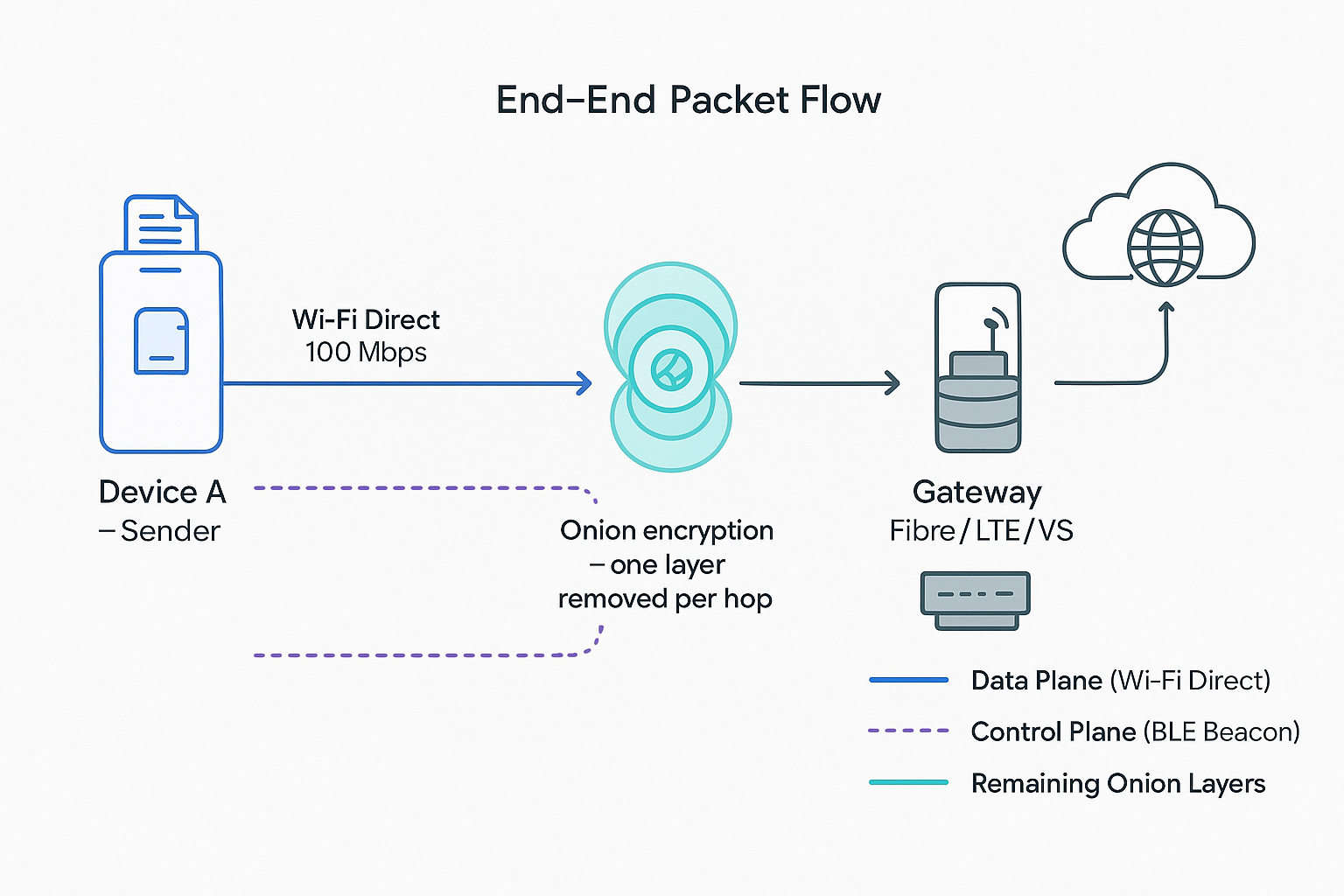
If a gateway is offline, packets queue locally. When a path appears, traffic resumes. Designed for intermittent connectivity.
Adoption Curve
- Seed: 0–2,000 nodes. Early escapes from bundle costs.
- Cluster: 2,000–50,000 nodes. Mesh “islands” where data purchases drop.
- Community: 50,000–250,000 nodes. City Nodes link neighborhoods.
- City: 250,000+ nodes. Majority discretionary traffic rides the mesh.
Tokenomics v1.1 — Engineered for Bandwidth, Not Hype
GC is hard-capped at 1,000,000,000 GC. The allocation is tuned to sustain the mesh and the Treasury Bot, while keeping clear room for long-term upside.
| Bucket | % | GC | Notes |
|---|---|---|---|
| Presale (this sale) | 8% | 80,000,000 | Early infra & ops. Max available in the presale. |
| Liquidity Pool (permanent) | 5% | 50,000,000 | LP tokens burned. Baseline on-chain liquidity. |
| Team & Advisors (vested) | 10% | 100,000,000 | 12-month cliff, 36-month linear vest. |
| Marketing & Listings | 7% | 70,000,000 | Community growth, CEX/DEX listings, partnerships. |
| Builder Rewards & Grants | 12% | 120,000,000 | Gateway hosts, contributors, audits, ecosystem grants. |
| Treasury Reserve | 20% | 200,000,000 | Fuel for the Treasury Bot’s sell-side interventions. |
| Strategic Reserve | 38% | 380,000,000 | Future expansion and liquidity augmentation. |
| Total | 100% | 1,000,000,000 | Hard-capped at genesis. |
Board / Builder / City Node NFTs sit on top of this allocation with vesting and governance rights as described in the whitepaper.
Vesting & Locks
- Team: 12-month cliff, then 36-month linear unlock.
- Builder Grants: Programmatic issuance tied to mesh KPIs.
- Treasury Reserve: Only Treasury Bot can use funds programmatically.
- Strategic Reserve: Movements governed by on-chain votes.
Burn Mechanisms
- LP Burn: Liquidity pool LP tokens are burned at deployment.
- NFT Shortfall Burns: Unsold Builder/Board slots can be burned via governance.
- Programmatic Burns: Governance-scheduled burns tied to coverage milestones.
Treasury Bot — Price-Band Defense at 0.14–0.20 USDC
The Treasury Bot is a rules-based market participant. It uses subscription inflows and reserves to defend a soft floor and ceiling for GC, keeping access predictable while leaving upside.
Inputs
- GC/USDC price oracle: DEX TWAP.
- Vault USDC balance (V): From the 6 GC subscription slice.
- Treasury GC balance (T): From the 2 GC slice + 20% reserve.
- Target band: [0.14, 0.20] USDC/GC.
- 2 GC → Treasury reserve (for sell interventions).
- 4 GC → Ops wallet (covers gateway bandwidth & support).
- 6 GC → Vault (funds buybacks).
Core Logic (every 6 hours)
If P > 0.20:
    Δ = min(0.01*T, k*(P-0.20)/0.20 * T)
    Sell Δ GC into USDC (refill Vault)

If P < 0.14:
    Δ = min(0.01*V/P, k*(0.14-P)/0.14 * V/P)
    Buy Δ GC using Vault USDC

Update TWAP, T, V
Write operations on-chain
k ~ 0.1–0.3 controls aggressiveness. Never more than 1% inventory per epoch.
The bot drains volatility into reserves and injects stability back into user pricing.
Why Traders Care
- Soft Floor: Below 0.14, Vault steps in as systematic buyer.
- Controlled Ceiling: Above 0.20, the bot sells to refill buyback ammo.
- No Emissions: Operations stay within the 1B GC cap.
- Transparent: Accounts visible through explorers & dashboards.
FAQ — Read Before You Ape
Is GC just a meme coin?
No. It’s a coordination token for a mesh ISP. The meme helps distribution, but the revenue loop is real: users pay 12 GC/year; that funds gateways, bandwidth, and the Treasury Bot.
How does internet get cheaper?
Phones provide routing; gateways are shared; subscription flows subsidize backbone costs. Each new node lowers the cost for everyone else.
What happens after presale?
Unsold tokens governed or burned. Liquidity deployed. Mesh expansion, City Nodes, and Treasury Bot activation follow immediately.
Can the rules change?
Only via on-chain governance. Builder/Board NFTs can propose and vote with time-locked execution.